
Our Science Lab in Nairobi
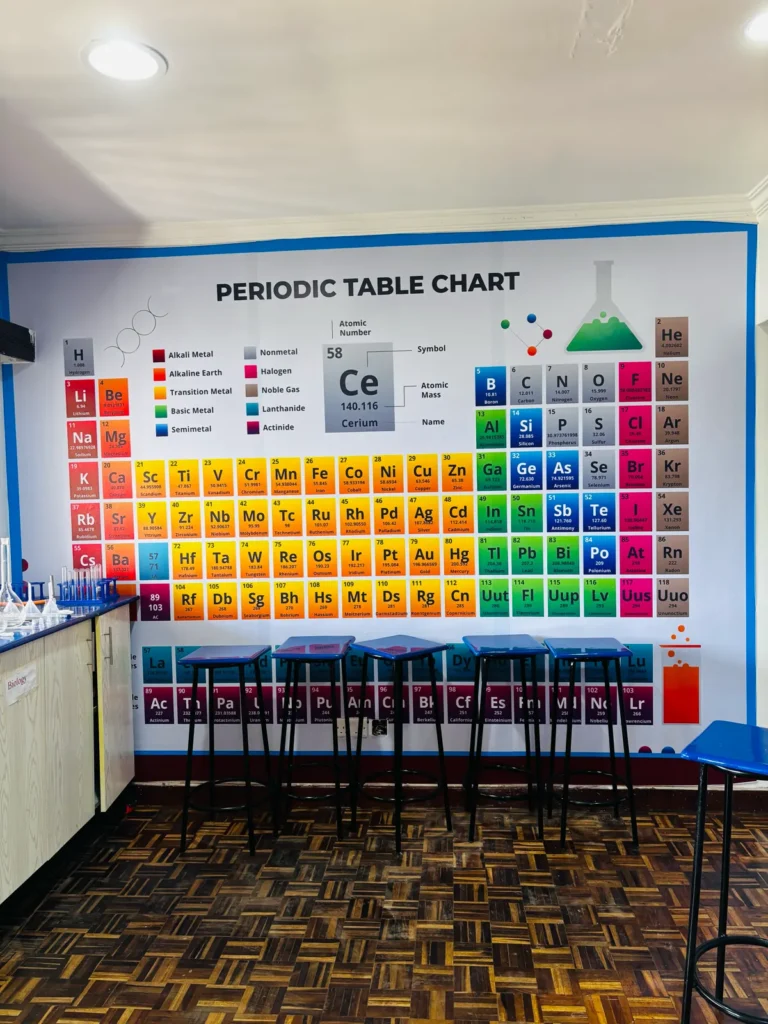
Science makes sense when you do it. At our centre on Riverside Drive, Cares has a real science lab with separate benches for Biology, Chemistry and Physics, running water, gas for Bunsen burners and a stocked reagent cabinet. Students do the experiments their syllabus expects, with a specialist tutor beside them, instead of only reading about them.
Most tuition in Nairobi happens at a desk or a dining table. That works for theory, but every science exam, from KCSE to IGCSE, A-Level and the IB, also tests practical skills. This page shows what is in our lab, what students do there and how to book a session.
Inside the lab
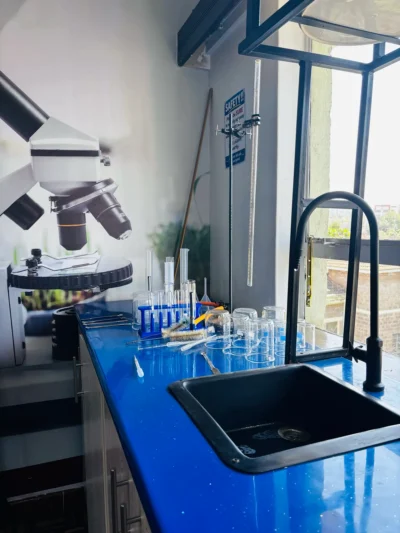
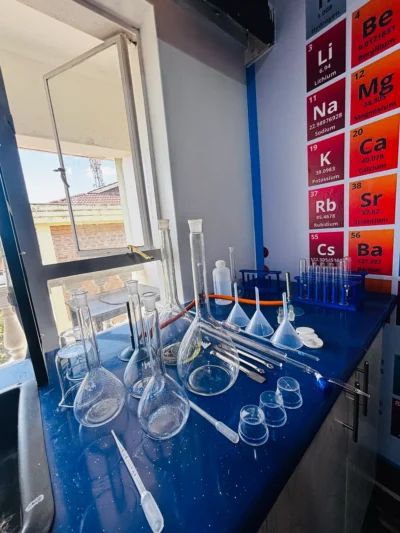
The lab has three bench units with hard-wearing worktops, labelled Biology, Physics and Chemistry. Each has a sink, storage underneath and space to lay out apparatus. Gas taps along the benches supply the Bunsen burners, and a full periodic table covers one wall, so it is always in view during Chemistry work. There are stools for a full bench of students, and the room has good natural light.
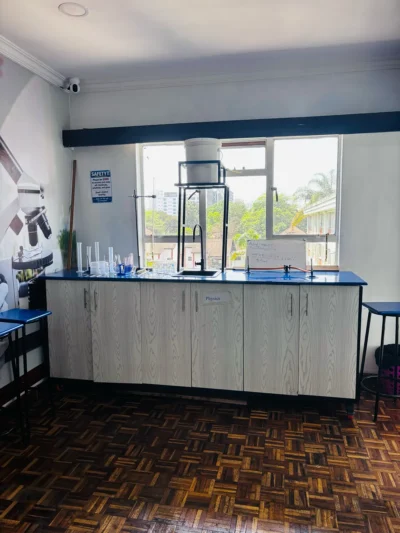
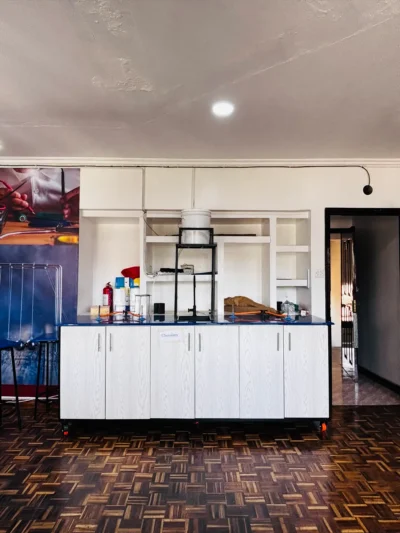
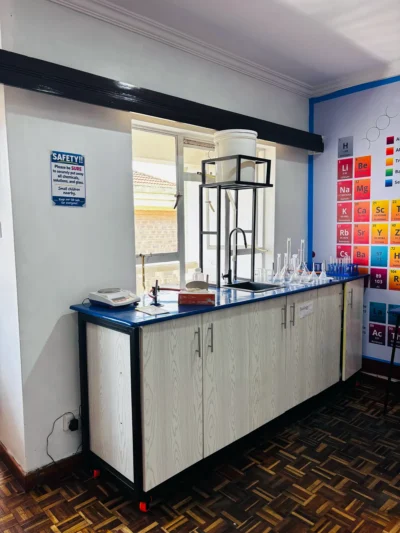
Chemistry practicals
Chemistry is where the lab is busiest. Students handle real glassware and real reagents, and learn to measure, observe and record with the precision examiners reward.
- Titrations: a burette on a retort stand, pipettes and conical flasks, for acid and alkali titrations and the calculations that follow.
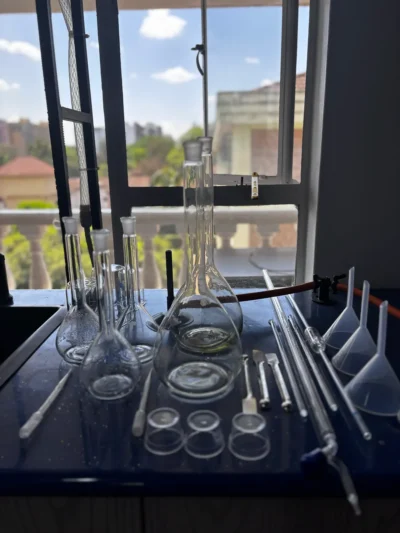
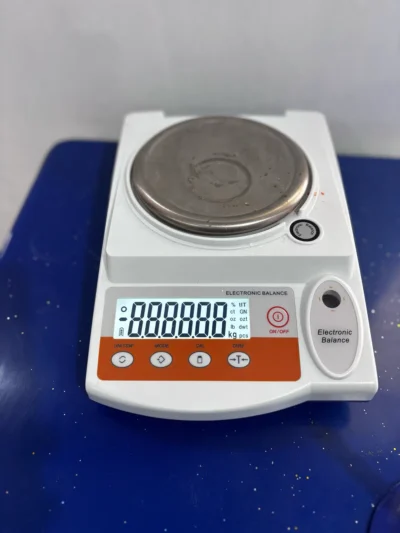
- Making standard solutions: volumetric flasks in several sizes and an electronic balance for weighing solids accurately.
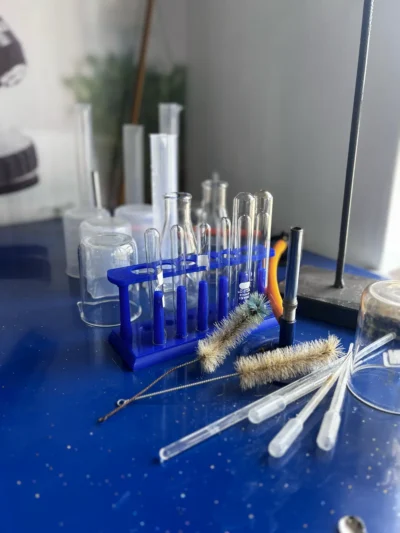
- Qualitative analysis: test tubes in racks, droppers and reagents for the classic tests for cations, anions and gases.
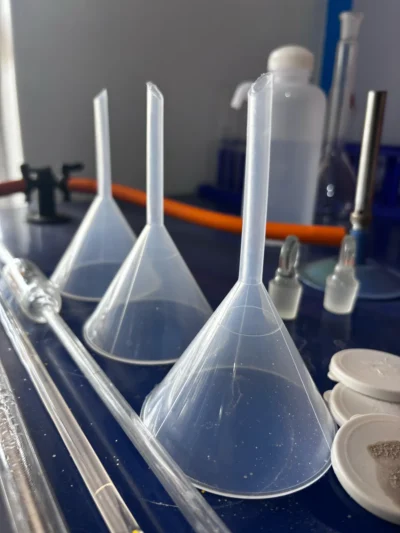
- Preparing salts: filter funnels and porcelain evaporating dishes for filtering, evaporating and crystallising.
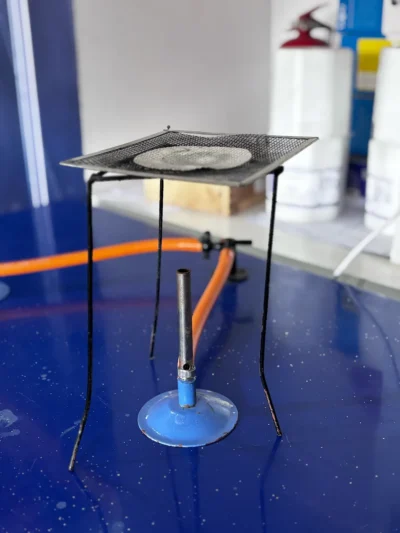
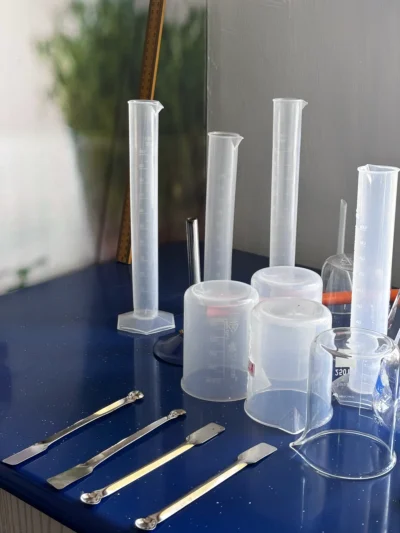
- Heating and rates of reaction: Bunsen burners on tripods with gauze, beakers and measuring cylinders.
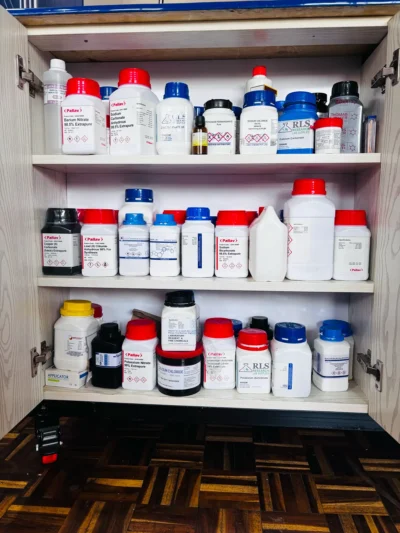
Reagents are kept labelled in a closed cabinet. They include common laboratory salts such as sodium carbonate, calcium carbonate, copper(II) carbonate, barium nitrate, potassium permanganate and magnesium sulphate, which cover many of the practicals in IGCSE, KCSE and A-Level Chemistry.
See our Chemistry tutoring page for how lab work fits with lessons at home or online.
Physics practicals
The Physics bench is set up for the experiments that appear again and again in practical papers.
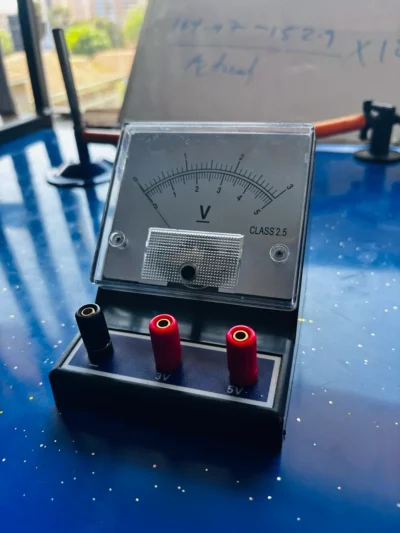
- Electricity: voltmeters, dry cells, cell holders, connecting leads and crocodile clips for building circuits. With the nichrome wire on the bench, students can investigate how the resistance of a wire depends on its length, a standard practical in KCSE and IGCSE.
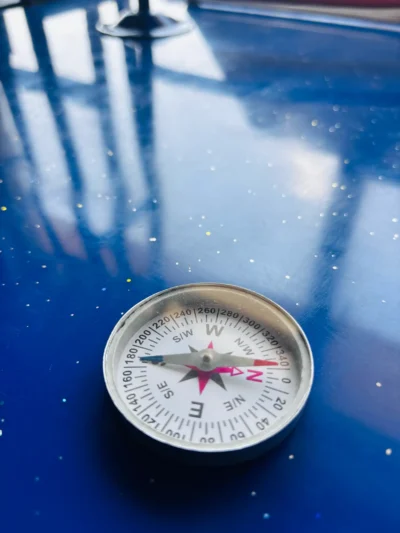
- Magnetism: a plotting compass for mapping magnetic fields.
- Forces and moments: slotted masses for loading springs and balancing moments.
Students learn to set up apparatus, take repeat readings, draw graphs with the right scales and work out gradients, which is where many Physics practical marks are won or lost.
More on our Physics tutoring.
Biology practicals
Biology students use the Biology bench, the glassware and the balance for practical work such as food tests, osmosis and enzyme experiments, with a tutor who explains what each result shows. Biology practicals vary a lot between syllabuses, so tell us which course your child follows and we will confirm which practicals we can run with them. More on our Biology tutoring.
Safety first
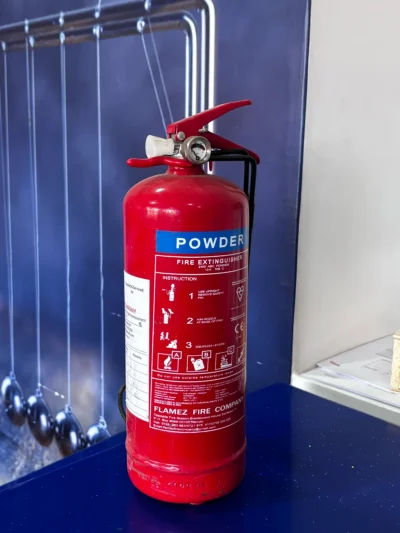
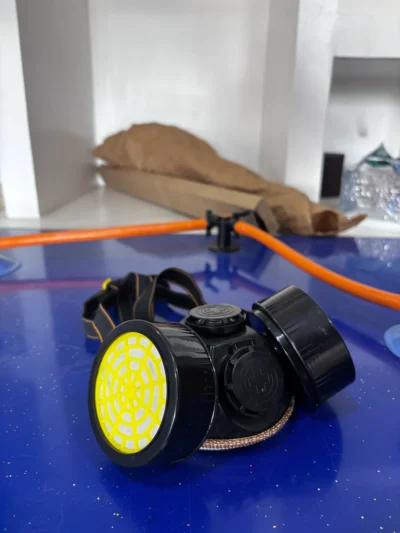
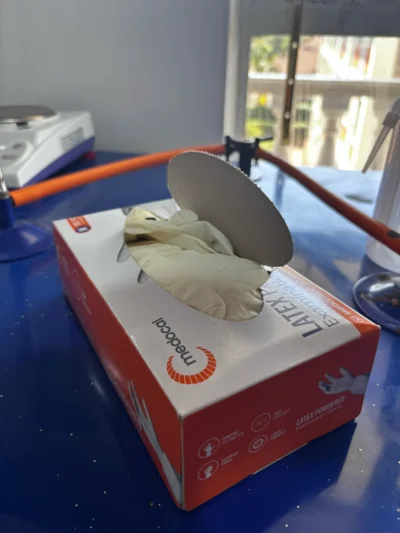
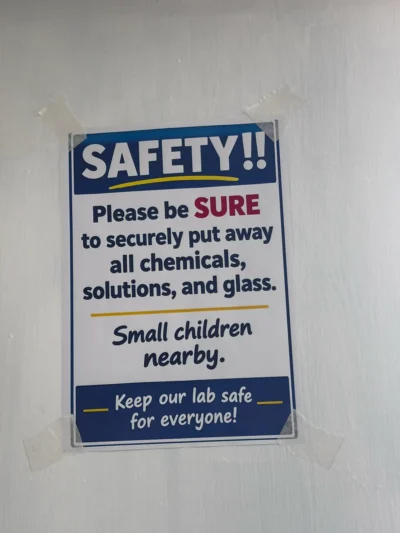
Every practical is supervised by a tutor from start to finish. The lab has a dry powder fire extinguisher, respirator masks and disposable gloves, and safety signs remind everyone to put chemicals, solutions and glassware away after use. Reagents stay in a closed cabinet, and students only handle what their practical needs.
Practical exams the lab prepares students for
- KCSE: the Paper 3 practical in Biology, Chemistry and Physics.
- Cambridge IGCSE: the practical test or the Alternative to Practical paper in Biology, Chemistry and Physics.
- A-Level: the practical skills papers, which test planning, observation, analysis and evaluation.
- IB Diploma: the internal assessment investigation in the sciences.
- CBC/CBE and Cambridge Checkpoint: hands-on Integrated Science and early lab skills, so younger students build confidence early.
Even students who sit a written Alternative to Practical paper do better when they have done the experiments with their own hands: they can picture the apparatus, predict the observations and spot the sources of error.
Who uses the lab
- Cares students who have regular lessons at home, at the centre or online, and come in for practical sessions.
- Homeschooled students, who often have no other access to a lab. See homeschooling in Nairobi.
- Students in exam years who want focused practice before a practical paper. See exam preparation.
How a lab session works
- Tell us the syllabus. We ask which curriculum and exam your child follows, and which practicals they find hard or have not done.
- The tutor plans the practical. The tutor chooses experiments that match the syllabus and prepares the apparatus.
- Your child does the experiment. One-on-one or in a small group, with the tutor guiding each step and explaining the science.
- Write-up and exam questions. Your child records results, draws graphs and answers exam-style questions on the same practical, so the skill carries into the exam room.
Lab sessions are booked by appointment at our centre: Daphton Court, Riverside Drive, Nairobi. They can be part of a regular tutoring programme or a separate booking. See how we set fees, and our science practicals service.
Frequently asked questions
Does my child need to be a Cares student to use the lab?
Lab sessions are booked through Cares and run by our tutors. Contact us with your child’s curriculum and year, and we will tell you what we can arrange.
Is the lab suitable for younger students?
Yes, with simpler practicals. Younger students do supervised, age-appropriate experiments that build curiosity and basic lab skills before their exam years.
Can my child do practicals if they learn online?
Yes. Many online and homeschooled students come to the centre for practical sessions and continue their theory lessons online.
Can we see the lab first?
Yes. Book a free consultation and ask to visit the centre. You can also see more photos in our gallery.
Or chat with us on WhatsApp: +254 704 737 831